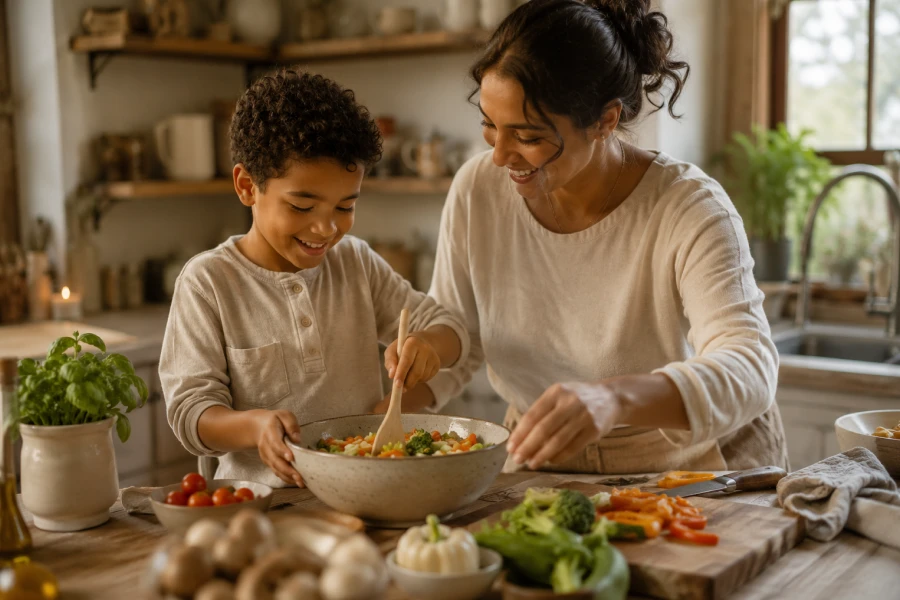
A busy kitchen can become the most welcoming room in the house. Thoughtful kids cooking activities give children a meaningful role instead of another distraction. They see ingredients change, hear practical language, and contribute to something everyone shares. Parents gain conversation time without arranging a separate lesson or elaborate project. Small responsibilities also show children that family meals require cooperation. The process feels playful because every step produces a visible result. Even imperfect pancakes or uneven vegetables can inspire genuine pride. Regular participation gradually replaces hesitation with curiosity and useful independence. Most importantly, cooking together creates connection during an ordinary part of the day. That combination makes kitchen time valuable long after dinner ends.
Children engage more deeply when their work feels real and manageable. A younger child might rinse berries, tear lettuce, or arrange toppings. Older children can measure ingredients, read steps, and practice careful knife skills. The right printable these shared kitchen projects help parents assign jobs without improvising under pressure. Clear choices reduce hovering because everyone understands the next task. Success also becomes easier when adults demonstrate one technique at a time. Praise should focus on attention, effort, and safe habits rather than perfect results. Mistakes then become information instead of reasons to step away. Over time, children begin noticing what needs doing before anyone asks. That awareness strengthens both competence and belonging.
The strongest lessons often arrive quietly during practical work. Measuring flour introduces numbers without turning the moment into formal instruction. Following a sequence strengthens memory, patience, and the ability to finish a process. Children also practice listening when several people share one workspace. These shared kitchen projects can support confidence because every completed task leaves visible evidence. A child who chops a banana sees immediate proof of growing capability. Parents can deepen that feeling by naming specific progress. Saying that a child stirred steadily carries more meaning than general praise. Repeated experiences build a realistic belief that unfamiliar skills can be learned. This confidence often travels from the kitchen into school and daily routines.
Safety works best when it feels like part of cooking rather than a warning lecture. Begin with clean hands, stable stools, and a workspace free from clutter. Place hot pans and sharp tools beyond casual reach before inviting children inside. A child friendly kitchen routine gives families repeatable habits that become automatic. Adults should match equipment to the child instead of relying only on age. Some children need extra modeling, while others manage new tools with careful supervision. Calm instructions are easier to follow than several corrections delivered at once. When a mistake happens, pause the task and reset without embarrassment. Consistent boundaries let children explore while understanding where adults remain responsible. That balance protects both safety and enthusiasm.
Weeknights rarely offer unlimited patience, so the plan must respect real schedules. Choose recipes with flexible steps and avoid introducing several new skills together. Preparation can begin before children join, especially when raw meat or boiling water appears. These shared kitchen projects work better when participation has a clear beginning and ending. Ten focused minutes can feel more successful than an exhausting hour. Keep a few dependable jobs available for evenings when everyone feels tired. Children may set napkins, portion herbs, or mix a simple dressing. Rotate responsibilities so familiar work stays interesting without becoming confusing. Parents can also save more ambitious recipes for weekends or school breaks. A realistic rhythm keeps the habit alive through busy seasons.
Shared cooking becomes memorable when families leave room for personality. One child may love decorating, while another prefers measuring exact amounts. A useful family cooking activity welcomes those differences instead of forcing identical participation. Let children choose between two suitable jobs whenever possible. Simple decisions create ownership without handing over the entire meal. Families can also repeat favorite recipes and notice how skills improve. Seasonal ingredients add variety while connecting food with weather and celebrations. Photographs can capture proud faces, although the experience matters more than documentation. Gentle humor helps when batter spills or vegetables land unevenly. These small moments become part of the family story.
The goal is not raising miniature chefs or producing restaurant-ready plates. Cooking together matters because children experience trust, contribution, and patient attention. These shared kitchen projects become sustainable when adults accept slower progress and occasional mess. A predictable cleanup step teaches that finishing includes caring for the shared space. Children can wipe surfaces, return safe tools, or sort scraps for composting. Parents should keep expectations flexible as energy and interest change. Some days invite full participation, while others support only one brief task. Consistency grows from returning to the kitchen without demanding perfection. Eventually, children associate meal preparation with competence and warm family connection. That is a practical legacy worth building one recipe at a time.




Leave a comment