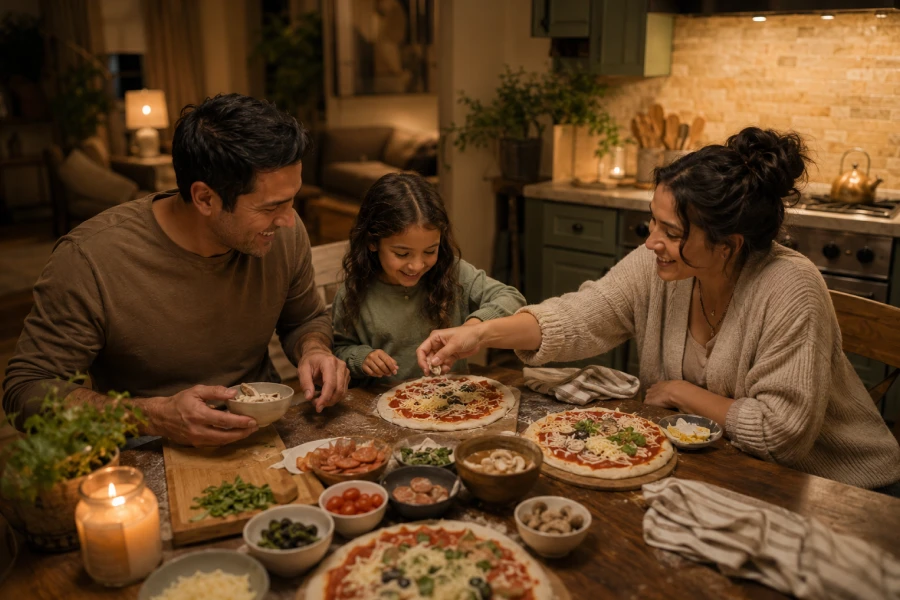
Some family traditions begin without a special occasion or elaborate plan. Family cooking with kids can turn an ordinary Tuesday into dependable time together. The shared task gives conversation somewhere to go besides direct questioning. Children contribute with their hands while adults offer attention without intense focus. That side-by-side structure often feels comfortable for every age. Food also provides natural choices, surprises, and small problems to solve. Everyone sees the meal take shape through combined effort. Even a simple sandwich night can carry warmth when roles feel genuine. Repeated evenings create familiarity that children remember more than perfect menus. Meaning grows because the experience belongs to everyday family life.
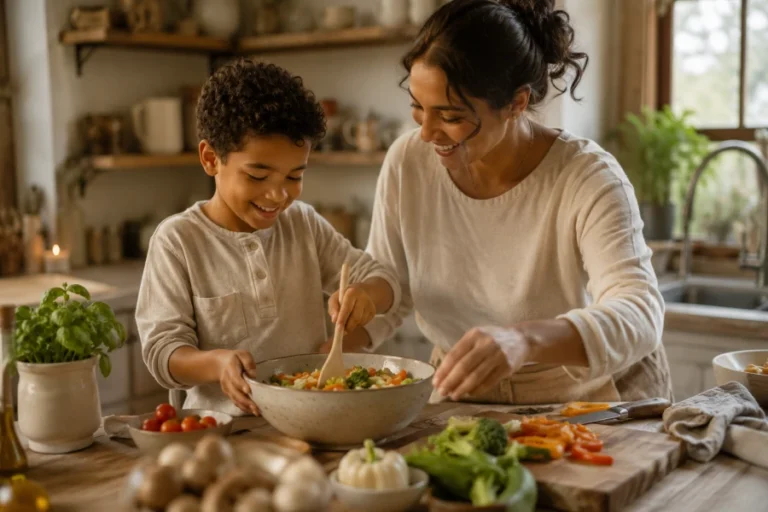
A workable rhythm starts with recipes that tolerate interruption and uneven pacing. Choose meals with several independent steps rather than one complicated sequence. A cooking together as a family approach succeeds when responsibilities remain visible. Place ingredients in one area and assign jobs before everyone begins. Younger children can wash produce or arrange items on a tray. Older children may manage timing, seasoning, or a simple side dish. Adults should keep one central task so the meal continues moving. Music can add energy, although loud distractions may complicate instructions. A brief cleanup pause prevents clutter from taking over the workspace. Predictability lets families enjoy the process instead of managing constant confusion.
Playfulness brings energy, but purpose gives children a reason to stay engaged. Cooking together works best when fun supports the meal rather than delaying it endlessly. Try tasting herbs, comparing textures, or inventing names for colorful combinations. Keep jokes away from sharp tools, hot surfaces, and moments requiring concentration. Children can decorate within boundaries or choose one ingredient from approved options. These decisions allow creativity while protecting the recipe and schedule. Parents should resist correcting every uneven shape or unusual arrangement. Imperfection often becomes the detail children remember most proudly. A calm sense of humor helps everyone recover from spills. The kitchen feels joyful when safety and freedom coexist.
Not every child connects through the same kind of kitchen work. One may enjoy precise measuring, while another prefers imaginative presentation. A flexible family cooking activity for children offers several paths into the experience. Quiet children might focus on repetitive tasks that create easy conversation space. Energetic children may benefit from carrying light items or mixing sturdy ingredients. Teens often respond better when trusted with a full component of the meal. Parents can ask for preferences without making participation entirely optional. Shared work still needs boundaries, especially when the household depends on cooperation. Respecting personality reduces conflict and increases genuine ownership. The family becomes stronger when different strengths receive useful roles.
Direct questions can make children feel examined after a demanding day. Cooking together creates a softer setting where conversation develops from shared attention. A comment about school may appear while someone peels fruit or kneads dough. Parents can listen without immediately turning the moment into advice. Pauses feel less awkward because hands remain occupied. Stories also emerge from smells, family recipes, and memories of previous meals. Adults can model openness by sharing one small detail from their own day. Avoid using kitchen time to investigate every problem or enforce unrelated consequences. Trust grows when conversation stays respectful and unforced. Over time, children may choose this setting for topics that matter.
Connection deepens when the meal reflects a shared effort. A parent child cooking experience gives families something concrete to appreciate together. At the table, mention the crisp vegetables, careful stirring, or creative arrangement. Specific recognition helps children understand how their contribution improved the meal. Avoid comparing siblings because teamwork should not become competition. Families can rotate who selects the recipe within practical limits. Theme nights or seasonal dishes add novelty without requiring expensive ingredients. Leftovers may become tomorrow’s lunch and extend the sense of accomplishment. These small rituals make home feel participatory rather than service oriented. Children learn that care often appears through ordinary actions.
Busy seasons require smaller expectations, not abandoning the habit completely. Cooking together can shrink to ten minutes during sports, exams, or travel. One child might portion snacks while another prepares water bottles. Weekend cooking can provide more room for new techniques and relaxed pacing. Keep a short list of familiar meals for evenings with limited energy. Parents should also accept takeout nights without treating them as failure. Consistency means returning to connection, not maintaining an unbroken performance. As children grow, their roles can become more independent and complex. The tradition evolves because the family evolves. What remains is the message that everyone has a place at the table.



Leave a comment